
Our feline friends are highly intelligent and mysterious animals, showing their love and affection in their own way. That said, any devoted cat caregiver knows that cats form deep bonds with their humans. We are certainly more than just the “providers of food” … but do cats consider us family?
How Cats View Social Relationships
Did you know that dogs were bred for companionship and teamwork by humans, but cats were enticed to live closer with us humans and embraced this relationship around 9,500 years ago!
Cats chose to settle near human communities because of the abundant access to food, as rodents were attracted by the food stored by humans. As a result, cats have retained much of their wild ancestry and along with that, the needs of their wild ancestors.
The furry friends we know and love today are socially flexible animals. Many wild relatives of our pet cats live alone, but “domesticated cats” create meaningful relationships based on familiarity, scent and trust.
In many multi-cat households, cats form “social groups” which are created through rituals like shared grooming and scent-marking between bonded cats and may extend similar behaviours towards trusted humans.
Do Cats Recognize Their Humans?
Research has proven that cats can form secure attachments to their caregivers, like the bonds seen between human infants and their parents.
Cats use a combination of senses to recognize their humans, primarily via scent, but also sound and sight. They can distinguish between voices and unique smells. One 2020 study suggests that cats can detect their caregivers’ emotional states and regulate their own behaviour in accordance. Oxytocin, known as the “love hormone” has also been proven to be released in both cats and humans during affectionate interactions, like petting around their cheeks and head.
So, while cats may not understand “family” in the human sense, they absolutely recognize familiar humans as trusted companions and will often treat them as part of their social group.
Do Cats Think That Humans are Cats Too?
To put it simply, cats don’t think of humans as cats or as humans. Cats don’t recognize species in the same way that we do but often treat us as part of their social group.
Cats distinguish our faces, voices, and even moods. However, they still interact using feline social cues like rubbing, purring, grooming and slow blinking. These behaviours may be less obvious compared to those of species that naturally live in groups, like dogs.
Your cat doesn’t sit there thinking “this is my human”, it most likely sees you as a big, weird, but beloved, member of its feline world. Someone who provides warmth, safety—and tasty snacks.
Behaviours That Show Bonding
Learning to understand your cat—and uncover what they think about you—is a matter of learning their language. Cats demonstrate their relationship with us in many ways:
Slow Blinking
A slow blink from a cat is one of the sweetest gestures they can give. Slow blinking is essentially a feline way of saying “I trust you” or “I’m relaxed with you.”
Head Butting
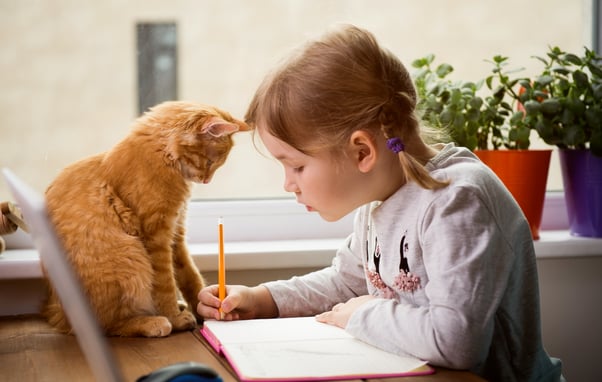
Cats have scent glands around their cheeks, forehead, and chin. When cats headbutt, they’re depositing their scent on you and showing that they consider us part of their social group or family.
Sleeping Near or On You
If your cats choose to sleep on or near you, this is a clear sign of their love and trust. Think of it this way, cats are most vulnerable when they’re asleep, so choosing to curl up beside (or on) you means they feel completely safe in your presence.
If your cat doesn’t want to sleep near or on you, it doesn’t mean they don’t trust you. This choice can depend on their personality, and some cats may like to have more personal space. If they choose to sleep by you, that’s a good sign too!
Vocalizing Their Love
Like humans, cats may choose to vocalize their love for you through meows, trills, chirrups, or purrs. They use sound to communicate affection and connection in their own special feline way. Cats understand that humans respond well to sound, and the clever part is that they can vary their meows depending on the message they want to convey.
Exposing Their Belly
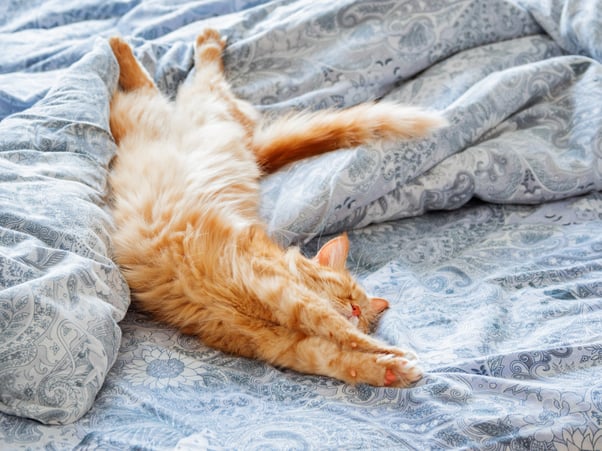
When cats expose their bellies, this is a display of their trust, rather than an invitation for a belly rub. Many cats may feel defensive when this vulnerable area is touched.
Top Tips to Strengthen Your Bond
Strengthening the bond with your cat is all about building trust, respect, and positive shared experiences. Cats can form deep attachments with their humans over time.
Here are some thoughtful ways to nurture and strengthen your bond with your kitty:
- Always communicate gently, using a soft, calm voice and move slowly and smoothly to avoid spooking your cat. You can even try to speak their language and slow blink as a greeting to build trust.
- Respect their space and body language and interact with them in ways that cats appreciate, rather than forced encounters e.g. picking them up or holding them.
- FELIWAY Optimum diffusers are a great way to help create a calming atmosphere, and serene space for your cat.
- Provide enrichment activities to keep them physically and mentally stimulated. There are so many ways to have fun together! Choose between interactive toys and puzzles as well as simple activities which will sharpen their natural instincts.
- Consistency is key! Try to stick to regular feeding and play times and avoid sudden changes in routines. If changes are needed, introduce these slowly to let your cat become accustomed to them.
- Respect your cats’ boundaries and let them choose when to interact. Try to give them safe hideaways and quiet zones to go to when they want.
- Get to know them and their unique personality! Just like in any other relationship it’s a matter of taking the time to get to know each other.
Want to find out more about cat habits, behaviours and how to build your bond together? Browse expert articles, advice and even articles from a cat’s point of view. You can also stay up to date with all our latest tips and advice by signing up for our newsletter.
References:
Miyairi et al. Behavioral responses of domestic cats to human odor. PLoS One 2025, 20(5): e0324016. https://doi.org/10.1371/journal.pone.0324016
Nagasawa et al. Effects of Interactions with Cats in Domestic Environment on the Psychological and Physiological State of Their Owners: Associations among Cortisol, Oxytocin, Heart Rate Variability, and Emotions. Animals 2023,13:2116. https://doi.org/10.3390/ani13132116
Quaranta et al. Emotion Recognition in Cats. Animals 2020, 10:1107. https://doi.org/10.3390/ani10071107
Vitale et al. Attachment bonds between domestic cats and humans. Current Biology 2019, 29(18):R864—R865