
Travelling with your cat can be stressful—but it doesn’t have to be! The key is preparation, and there are a few small but smart steps cat parents can take to help make every travel experience a positive one.
In this guide, I’ll explain how to prepare your cat for travel, share practical cat carrier tips and provide expert advice to help reduce your cat’s travel anxiety or stress before, during and after your journey.
Why Do Cats Find Travelling Stressful?
As humans, travelling from place to place comes naturally to us. However, this isn’t the same for our feline friends. Cats are creatures of habit and territorial so feel safest in familiar surroundings. When travelling with a cat, they’re suddenly exposed to unfamiliar sights, sounds, smells and movement, which can be stressful.
Every cat is different, but some common reasons for cat travel stress can include:
- Unfamiliar environments—cats rely on familiar scents to feel safe, so new places can smell different and make them feel uncertain and insecure.
- Car movement and motion sickness—the movement of a vehicle can make some cats feel anxious, nauseous or uncomfortable.
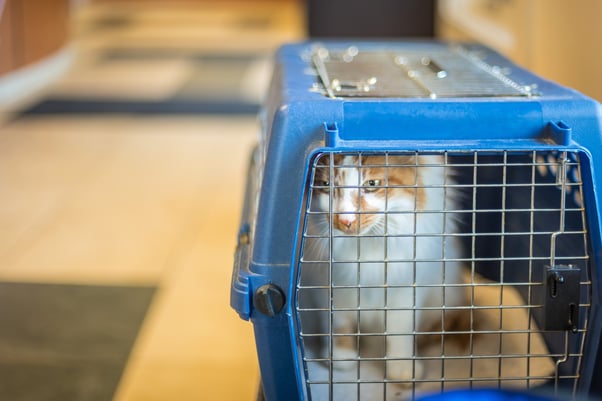
- Being confined in a carrier—confinement can remove a cat’s sense of control. If your cat only sees their carrier before vet visits or other stressful events, they may develop a negative association with it.
- Loud noises and vibrations—traffic, engines, car doors and unfamiliar sounds can startle cats.
- Changes to their routine—cats thrive on predictability, so changes to feeding times, sleeping patterns or their environment can increase anxiety.
- Previous negative experiences—if your cat has had a stressful journey before, they may remember it and become anxious during future trips in the carrier.
How to Prepare Your Cat for Travel
Preparing your cat for travel starts well before the day of your journey. Cat carrier training is easier than it sounds, and it can help prevent problems associated with travel in the future. Even taking a small step towards this can make a big difference to your cat’s confidence and help reduce stress when travelling with your cat.
For instance, instead of putting your cat’s carrier in the shed or loft after use, make it into a safe place for your cat to rest in one of their favourite rooms. Just remember to clean it thoroughly if your cat has been to the vet, as they may not want to use it if it still carries the smells associated with that trip.
You can encourage your cat to see their carrier as a comfortable, familiar space by:
- Removing the top half of the carrier.
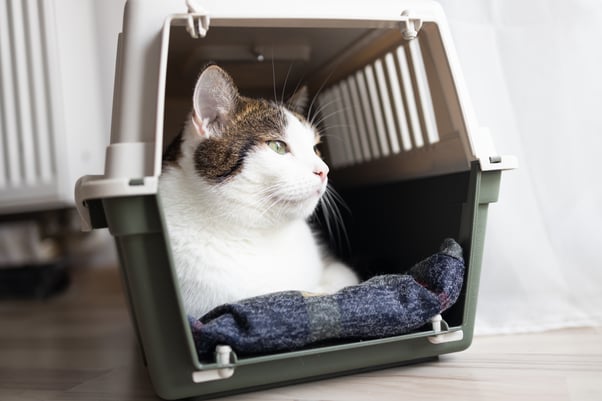
- Placing a soft, comfy bed inside.
- Placing the carrier in a quiet, warm location in your home.
- Offering your cat treats once inside or playing with your cat near their carrier to create a positive association with it.
These simple steps form the foundation of cat carrier training and can help make travelling with your cat a much more positive experience over time. For more information on this, visit the International Cat Care YouTube channel.
Choose the Right Cat Carrier
Did you know that just choosing the right cat carrier can make a significant difference to your cat’s experience during travel? While it can be tempting to choose a cat carrier that looks appealing or one you have seen on social media, it’s important to consider how your cat will feel while travelling in it.
Choosing a cat carrier that is safe and comfortable helps create a positive experience for your cat. A sturdy plastic carrier with a lockable door and ventilation slats is usually the best option, as it is strong, safe and easy to clean, and allows your cat to hide if they choose to. A carrier with a removable top half is another excellent cat carrier as it makes cat carrier training and veterinary examinations easier—your cat and vet will thank you for it!
Where possible, avoid cardboard or material carriers, as they offer less protection and are usually not as sturdy or supportive, making it easier for cats to escape. Backpack carriers can also move around a lot during use, meaning your cat may have a bit of a bumpy ride, so they are best avoided.
Choose the Right Size Carrier
Ideally, your cat’s carrier should be large enough for them to turn around comfortably, but not so big that they slide around during travel. If you get a small carrier for your kitten, don’t forget to upgrade to a larger one once they are around a year old.
Some backpack carriers restrict movement, so they may not support a comfortable travel experience.
Cat Carrier Tips Before You Travel
Here are some key cat carrier tips to think about before your journey:
How To Get a Cat into a Carrier
Understandably, this can be a challenge for a lot of cat parents—especially as cats have a good long-term memory and may associate their carrier with having a previous unpleasant experience, such as a vet visit.
Cat carrier training is recommended, as it encourages cats to enter their carrier voluntarily. To try this before travelling with your cat you can:
- Make the carrier as inviting as possible (as described above).
- Use treats to lure your cat into their carrier. Gently wrap or cover your cat in a towel and place them in their carrier (if travel is urgent, e.g. an important vet appointment and delaying the trip isn’t an option).
- Stay calm. Cats pick up on our emotions, so if you become stressed your cat will too.
How to Make a Cat Carrier Comfortable
Reducing cat travel stress is all about comfort. A cat that feels comfortable is more likely to be relaxed during travel. Here’s how you can help your cat feel more relaxed when travelling inside their carrier:
- Use a thick, soft and absorbent bedding. This not only supports comfort but will also help ensure your cat doesn’t become too dirty should they have an accident. Adding a puppy pad underneath can help with any accidents, and familiar-smelling bedding also provides reassurance.
- Most cats feel safer when hidden, so using a solid plastic carrier can help conceal them. You can also place a small-medium sized towel or blanket over their carrier during travel—just make sure to leave gaps for air flow.
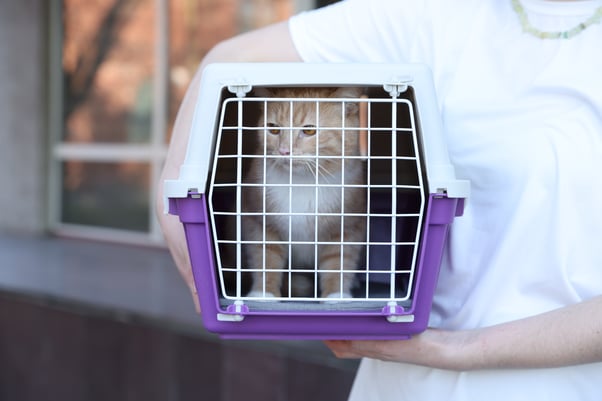
- Hold the carrier steadily with both arms underneath, or with at least one arm underneath and one on the handle as this can help minimize movement or accidentally bumping the carrier into objects!
How To Reduce Your Cat’s Travel Stress During the Journey
In addition to following the steps on how to make a cat comfortable in their carrier, here are some things you can do to ensure your cat is safe too:
- Secure your cat on the floor behind the passenger seat, or on the back seat using the seatbelt. Never let your cat roam freely in the car, as this is dangerous and may cause an accident. It could also result in your cat escaping when you arrive at your destination and open a door.
- Drive slowly and carefully to prevent excessive movement inside the car, and give yourself plenty of time so you don’t feel the need to rush.
- Play soft or classical music at a low level to help calm your cat.
- Speak calmly to your cat to comfort them (but be careful not to be distracted if you’re driving).
- Avoid using air fresheners or smoking in the car, as strong smells can be unpleasant for cats.
- Keep the car temperature stable, not too hot or cold.
Travelling Long Distance With a Cat
If you are travelling for a long distance with your cat in a car, you will need to factor in things such as offering a litter box (in an additional larger carrier or crate) and water at least every two hours. Food should ideally be withheld during travel to prevent vomiting from motion sickness. However, some kittens, elderly cats or those with certain diseases may require more frequent meals—if you are unsure speak to your vet.
If you are very worried about your cat’s travel stress levels or nausea during travel, speak to your vet, as in some circumstances they may prescribe medication to help your cat feel less sick or anxious about car travel.
If you’d like to learn more about your cat’s behaviour, travelling with a cat and how to reduce cat travel stress, keep exploring the FELIWAY blog for expert advice and practical tips. While you’re here, don’t forget to sign up to our newsletter for the latest tips, advice and insights straight to your inbox!